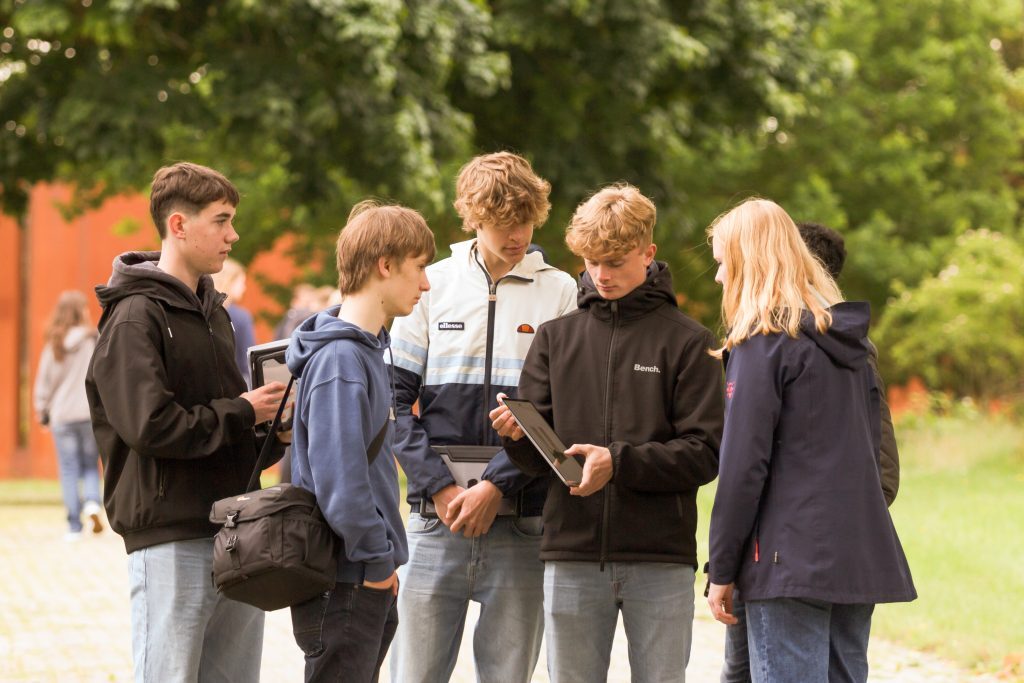
In order to make the examination of the Nazi era more accessible and, in particular, more interesting for younger people, the University of Osnabrück has launched a project to digitise memorial sites in the Emsland region. In June, 25 pupils in Years 11 and 12 at our school had the opportunity to take part in this project.
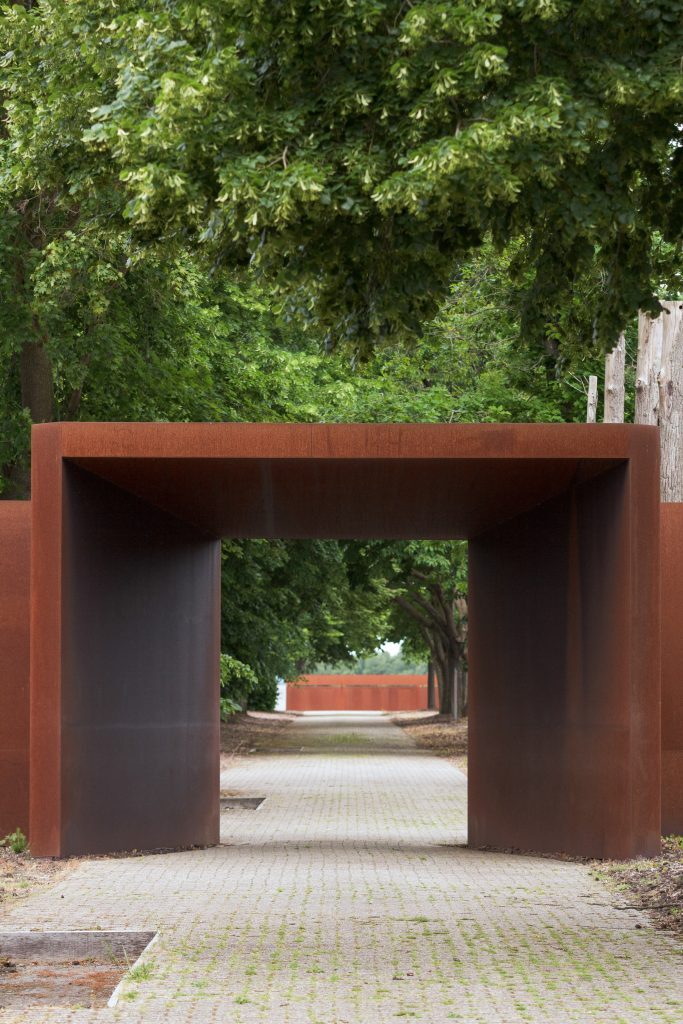
Remembrance culture is an important part of our everyday lives. Especially in times when right-wing pressure is growing, we should learn from the mistakes of the past. For this to happen, historical and political education – not only in schools – plays a central role. In order to make the examination of the Nazi era more accessible and, in particular, more interesting for the younger population, the University of Osnabrück has launched a project to digitise memorial sites in the Emsland region. In June, 25 students in Years 11 and 12 at our school had the opportunity to take part in this project. We spent a day visiting the Esterwegen Memorial, which commemorates one of a total of 15 camps in the Emsland region.
As part of the project, we gained an insight into the work of the students involved in the project "History and Remembrance Culture in the Age of Digitality. The Emsland camps as a conflict landscape in transformation." After an hour's drive, we were welcomed by Ms Selle from the University of Osnabrück, who had already introduced us to the project at school three weeks earlier. We then received an introduction to the use of various technical devices before exploring the site on a short guided tour.
Using digital cameras, we recreated historical photos in six groups – this method is called refotography. This allows us to document the changes that have taken place at individual locations on the site. The connection between the site and its Nazi past also becomes more tangible through the direct comparison of images from today and the past. In addition, we used special software to create 3D scans of various significant locations within the memorial site.
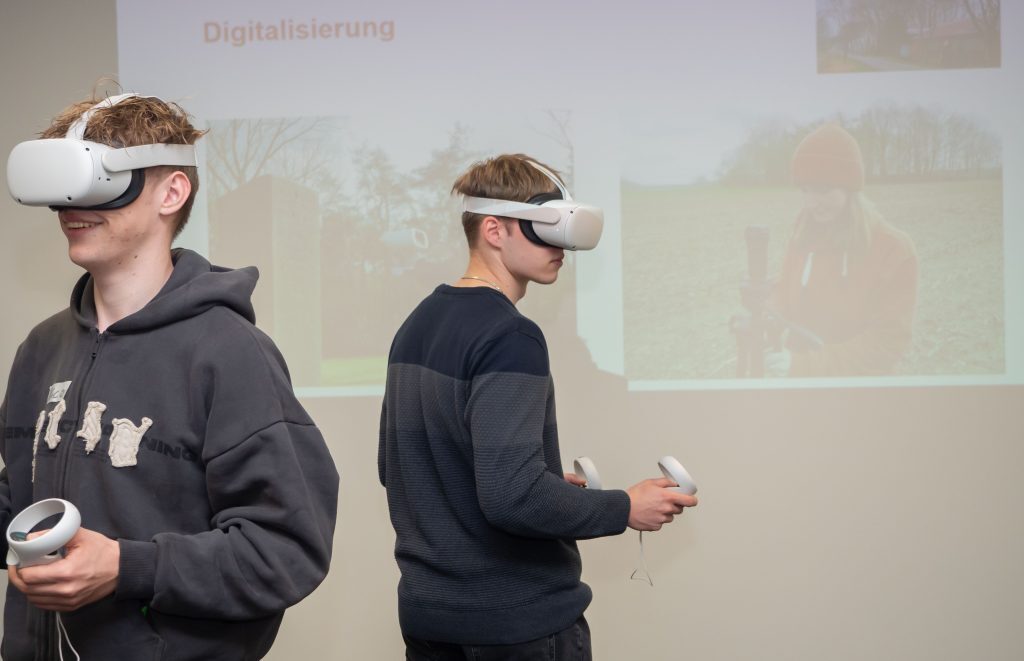
We were then able to view some of the scans ourselves using VR glasses, including scans of other memorial sites. One of the aims of the project is to create digital 360° tours for as many memorial sites in the Emsland region as possible, some of which we were already able to test.
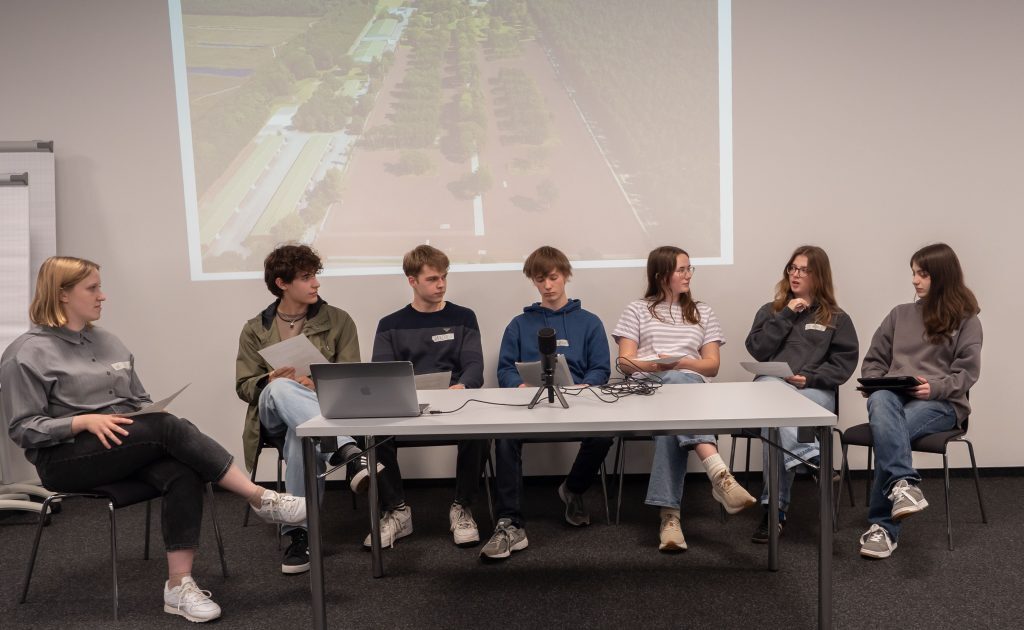
Finally, we wrote short information texts on various pre-assigned topics, which could then be incorporated into the digital tours. The topics included the Esterwegen Memorial, the Aschendorfer Moor and the so-called "Herold Massacre".
In a short feedback session, we reflected on the implementation of the project and developed further ideas for better spatial orientation within the 360° tour (e.g. through directional arrows), for a more lively design using primary sources, e.g. through quotes from contemporary witnesses, and for more accessible access through audio texts and image descriptions.
We would like to express our sincere thanks to the University of Osnabrück and the Esterwegen Memorial for the opportunity to participate in this project – and thus contribute to the culture of remembrance.
Text: Melina Bimm
Photos: Melina Bimm, Stefan Roters